
Doug O’Neill: Trainer Profile and Career Context
On this page 5 sections
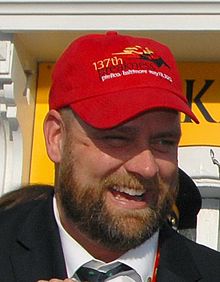 Doug O’Neill’s career includes major victories and a regulatory record that should be described from dated official decisions rather than broad labels or assumptions about motive. The trainer has won more than 2,000 races including a much-heralded run at the Triple Crown in 2012 with I’ll Have Another and a win in the 2016 Kentucky Derby with Nyquist.
O’Neill was born in Dearborn, Michigan in 1968. At age ten, the O’Neill family moved to California where young Doug often attended the races at Santa Anita Park with his father. This spawned his love of horseracing, and in high school he became a hotwalker who helped to cool horses out after a race or morning workout. This was followed by a stint at Del Mar racetrack, and in 1989 Doug O’Neill received his trainer’s license. Racing ran in the family, it seems. O’Neill’s brother Dennis became a bloodstock agent to help clients select horses for purchase at large auctions.
In just eleven years, O’Neill became a major player on the California racing circuit. His stable of horses grew to one of the largest in the United States and the largest in Southern California. The trainer accomplished his early success with modest horses, winning lower level claiming and allowance events. It wasn’t until 2002 that O’Neill saddled his first Grade 1 stakes winner, Sky Jack. The horse won the Hollywood Gold Cup at the now defunct Hollywood Park, and the race was the first time one of O’Neill’s horses had been entered in a Grade 1.
Owner relationships and access to suitable horses are important parts of a trainer’s opportunities. They are context for the results, rather than proof that every accomplished trainer followed an identical route. For O’Neill, that owner was J. Paul Reddam. A successful run with Lava Man, arguably the most successful claiming horse in the history of horseracing, precipitated O’Neill’s rise to the highest echelons of the sport. In 2007, the trainer saddled two horses in the Kentucky Derby. While neither Liquidity or Great Hunter was able to capture the roses that day, it would be just five more years before O’Neill found himself standing in the Churchill Downs Winner’s Circle with I’ll Have Another. The victories brought greater attention to the stable. The race results, the subsequent injury and separate regulatory decisions require their own evidence rather than being merged into one explanation.
After winning the 2012 Kentucky Derby and Preakness, I’ll Have Another was scratched from the Belmont Stakes because of a tendon injury. The California Horse Racing Board separately issued a 2012 decision in a total-carbon-dioxide case involving another horse, requiring a $15,000 fine and a suspension with part stayed subject to probation. These are distinct events. The record supports reporting the ruling and the documented injury; it does not support presenting speculation about a fabricated injury as fact.
A May 23, 2016 report carrying confirmation from Doug O’Neill Racing said Nyquist developed a fever and remained at Pimlico instead of shipping to Belmont. Nyquist had already finished third in the Preakness, so a Triple Crown sweep was no longer possible. The illness report does not establish an illegal-medication finding. Regulatory counts likewise need named decisions, dates and classifications before they can be meaningfully compared.
Despite the controversy, O’Neill continues to be a successful trainer on a national scale and a favorite of those who like EZ Horse Betting. He was named Trainer of the Year in 2002 by the California Thoroughbred Breeders’ Association and continues to add to his win total.
If you would like to watch and wager on horses trained by Doug O’Neill and all of the sports top trainers, take some time today and register an account with Bet365. Check the racebook comparison for account research, then confirm your eligibility, the actual race menu and the terms of any welcome offer. A trainer profile does not establish account access or promotion eligibility.
Doug O’Neill’s Training Approach and What It Means for Bettors
Doug O’Neill’s career — which includes two Kentucky Derby victories with I’ll Have Another (2012) and Nyquist (2016) — has been marked by both exceptional major race success and significant controversy over medication violations that resulted in lengthy suspensions. For bettors assessing O’Neill-trained horses, this dual record creates an analytical challenge: the genuine training talent is documented by his major race results, while a specific regulatory decision must be read for what it actually found. It does not justify a blanket assumption that every horse or performance in the stable was affected.
The practical approach for bettors is to focus on O’Neill-trained horses’ recent form under current regulatory conditions rather than placing heavy weight on performances from periods when regulatory enforcement was less certain. Recent form may be more relevant to today’s condition, but neither its recency nor the current rules guarantee reliability. Identify the horse, race and applicable ruling when a specific issue affects the analysis. This principle — assessing form reliability in light of the regulatory environment that produced it — applies to any trainer with a history of medication issues, and documenting the evidence makes the reasoning reviewable. It does not automatically improve prediction accuracy or establish a betting edge. For more on trainer assessment, our article on betting trainers in horse racing covers how to use trainer records effectively. And our guide to why some people say horse racing is fixed addresses the broader integrity context.
Major-race record in context
O’Neill’s official stable profile describes a two-time Kentucky Derby winner, and the results identify the horses: I’ll Have Another in 2012 and Nyquist in 2016. I’ll Have Another also won the 2012 Preakness. Nyquist entered the Derby unbeaten and later finished third in the Preakness.
| Horse | Season | Major result | Campaign outcome |
|---|---|---|---|
| I’ll Have Another | 2012 | Kentucky Derby and Preakness winner | Missed the Belmont with a tendon injury. |
| Nyquist | 2016 | Kentucky Derby winner | Third in the Preakness; later missed the Belmont after illness. |
| Lava Man | 2000s | Multiple Grade 1 wins after being claimed | An older-horse campaign, separate from the classic bids. |
How the regulatory record should be reported
The California Horse Racing Board’s decisions archive links the May 24, 2012 decision in O’Neill’s case. That decision concerned an elevated total carbon dioxide reading from Argenta in 2010. The board imposed a $15,000 fine and a suspension, with a portion stayed under probation conditions. Precise reporting names the regulator, horse, test issue, decision date and sanction.
The cited regulatory decision did not establish that the Belmont injury was fabricated. Contemporary veterinary records documented tendon inflammation before I’ll Have Another was scratched. It is fair to report scrutiny and confirmed rulings; it is not fair to turn suspicion into a finding.
The same standard applies to any trainer. A positive test, overage, administrative responsibility rule and finding of intentional administration are different things. Readers need the exact ruling before deciding what weight to give it.
A bettor’s checklist for trainer information
- Use current statistics from the race program or an official data provider and record the sample size.
- Separate the trainer’s overall percentage from the relevant condition, such as first after claim or turf to dirt.
- Read the ruling itself when integrity affects the analysis; do not rely on an unattributed violation count.
- Give recent races under current rules more weight than distant performances.
- Ask whether the public has already shortened the price because of the trainer’s name.
Trainer information can explain changes in placement, preparation and equipment, but it does not tell a bettor that a particular horse is sound, improving or fairly priced. Complete the horse-level analysis first, then record any trainer adjustment in the Race Lab.
Confirmed record and unresolved questions
O’Neill’s confirmed successes and regulatory history can be read together. The primary ruling establishes the sanction, while unsupported claims about private motives remain unresolved. Any later ruling would add a new dated decision to that record. For race analysis, the practical distinction is between a regulator’s finding and a handicapper’s suspicion. The former can be cited and dated; the latter may justify uncertainty but cannot establish which horse, race, or performance was affected. Keeping those categories separate protects the documented misconduct account from being weakened by claims the record does not prove.
Official race and stable records supply the major-race results. The regulatory summary comes from the California Horse Racing Board decision archive and its 2012 decision.
Related research
Continue the Analysis
Racehorse Profiles
Explore notable horses, breeds, form, and stories from racing history.
ContinueJockey Profiles
Browse riders, careers, records, and the craft of race riding.
ContinueTrainers & Training
Learn conditioning concepts and browse trainer profiles.
Continue
if you deport the crook don’t send him to Canada, we have enough of these sociopaths in all areas of our daily lives.