
Why Do Mexico And Central America Produce Many Good Jockeys?
On this page 6 sections
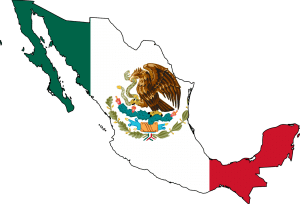 Several successful North American jockeys were born in Mexico or Central America. Their individual careers deserve attention without assuming that one regional trait explains every success. The 2015 Triple Crown winner, American Pharoah, was ridden to victory by Victor Espinoza who has an amazing personal story. Other riders like Laffit Pincay, Jr. came from impoverished backgrounds to become the most successful jockeys in history. Why do these countries produce many good jockeys? It could have to do with the rich racing history in Mexico.
Mexico’s Horse Racing History
The Great Depression began in 1929 and affected employment, household income and leisure spending. Border racing belongs within that wider history, but it should not be presented as a dependable way for struggling people to turn their last dollar into food. Historical attendance, race records and contemporary reporting are different kinds of evidence; none establishes a general explanation for why every visitor chose to attend.
While the Great Depression affected the poorest Americans the hardest, the wealthy were able to regain their footing much quicker. Cross-border tourism brought American visitors to Mexican entertainment venues. Their individual reasons for travel cannot be established from the existence of that tourism alone. One of their favorite activities to witness there was horse racing at a Tijuana track known as Agua Caliente. The name translates to English as “Hot Water” or “Hot Springs” which is also the name of where Oaklawn racetrack is located today in the United States.
Agua Caliente belongs to the history of border racing and international competition. Its racing programme drew visiting horses and horsemen, while local racing provided opportunities for riders and stable workers. Separate that sporting history from colourful anecdotes about particular jockeys unless a reliable historical account supports the details. A track’s reputation alone cannot verify an individual’s private conduct.
Horse racing was a popular border town sport in Mexico, but the smaller villages south of the border also were known for bush tracks where unsanctioned races were held. Pancho Villa himself is believed to have been a fan of matching his men’s horses against one another to see who had the fastest ride. It wasn’t long before the men riding these horses were chosen for their small stature.
Mexican and Central American Jockeys
A jockey’s path can begin with family involvement in horses, work in a stable or formal riding instruction. Those routes differ between countries and between individuals. Barn work can build familiarity with horse care, but a regional label does not establish a rider’s family income, upbringing or training. Compare named biographies instead of assuming a shared background for everyone born in Mexico or Central America.
Professional race riding also requires balance, fitness, judgement and opportunities to obtain mounts. Small stature may help a rider meet assigned weights, but nationality does not measure those abilities. A rider still needs to develop skills and build a record in the relevant racing system. Financial incentives are one possible factor in a career choice, not proof of a particular person’s motivation or a national advantage.
In America, the Great Depression passed on. The war came to an end in Europe. Prosperity began to return and horse racing began to once again rise in popularity. By the time the 1970’s rolled around, horse racing was on the verge of a Golden Era. Three Triple Crown winners emerged during the 1970’s and interest in racing was at an all time high. The purse money began to increase and there was opportunity for jockeys from Mexico and Central America.
Pincay Comes to the United States
In 1966, trainer Fred W. Hooper and jockey agent Camilo Marin decided that they were going to take a chance on a young rider from Panama. The young man had enjoyed tremendous success on the Latin American racing circuits. He needed sponsorship to come to the United States. Hooper and Marin obliged. The rest, as they say, is history.
Laffit Pincay, Jr. arrived at Arlington Park in Chicago to face the same challenges as all immigrant workers. He was subjected to ridicule and outright racism. Pincay rose above all the obstacles and won eight of the first eleven races he competed in at Arlington Park. His winning ways continued, but it was his demeanor which gained him respect. Just four short years after arriving in the States, Pincay received the George Woolf Memorial Jockey Award in 1970. This award is given each year to a rider whose personal conduct off the track matches or exceeds his skill on it.
Throughout his career the awards continued to come. In 1996, Pincay received the Mike Venezia Memorial Award for sportsmanship and citizenship. Five times he was given the Eclipse Award for Outstanding Jockey of the Year. Pincay ultimately won 9,530 times during his career and became the all-time leading rider by wins until the record was broken by Russell Baze. His lifetime win percentage was 20%, an unbelievably high stat when you consider that Pincay rode in the biggest events racing had to offer.
How Regional Racing Cultures Develop Elite Jockeys
Documented training routes offer a better starting point than a single cultural explanation. Formal jockey schools, family instruction and stable experience can all contribute, but their availability and quality differ. Successful biographies show what particular riders accomplished; they do not measure the success rate of everyone who started in the same region. A comparison needs both those who succeeded and the wider population of trainees before it can establish a regional advantage.
Panama’s contribution to American racing is particularly notable given the country’s small size. The pipeline from Panamanian racing to the major American circuits has produced multiple Hall of Fame jockeys, including Laffit Pincay Jr. and Manny Ycaza, whose careers demonstrate that exceptional talent developed in a specific regional context can compete at the absolute highest levels of the sport. Understanding these regional pipelines is useful for bettors who follow apprentice and developing jockeys — examining training, recent rides and tactical development helps assess the individual. Birthplace alone cannot identify a future star or determine the fair odds of a mount. For more on the jockeys who have shaped American racing, our articles on Angel Cordero and Julien Leparoux cover riders from other distinguished regional traditions. And our guide to betting jockeys in horse racing explains how to use jockey background and form in your handicapping.
Espinoza Wins the Triple Crown
Victor Espinoza is carrying on a fine trend. He hails from Tulancingo, Mexico and forever etched his name in horse racing history by winning the Triple Crown aboard American Pharoah in 2015. Espinoza grew up as the 11th of 12 children on a dairy farm. He learned to ride horses under the guidance of his older brother Jose. When he was just 17 years old, Espinoza paid for his tuition in jockey school by driving a bus in Mexico City. He began his riding career at the Hipodromo de las Americas in Mexico City.
Espinoza did not even speak English when he arrived in the United States, but his riding talent soon spoke for him. Espinoza was noticed by top trainers on the California racing circuit. One of these was Bob Baffert. It would be Baffert who would name Espinoza as the rider of American Pharoah. Together, horse and rider won all three Triple Crown events in 2015 to become the first Triple Crown winner in 37 years. The pair also captured the Breeders’ Cup Classic, making American Pharoah the first ever Grand Slam champion in horse racing.
Did you know that you can watch and wager on jockeys from Mexico and Central America when you create an account with an online racebook recommended by EZ Horse Betting? It takes only a few minutes to sign up and you will receive a nice welcome bonus plus other perks. Check our Bovada racebook review, Twinspires review or even our Betamerica review. All great choice if you are in the US. online racebook comparison for folks anywhere! VIVA MEXICO
More topics:
Compare Individual Paths, Not National Stereotypes
| Evidence | What to establish | What it cannot prove |
|---|---|---|
| Training | School, stable or family instruction | That everyone from the region has the same background |
| Migration | Where and when the rider moved circuits | An automatic advantage at the new track |
| Results | Dated mounts, wins and major races | A future return from every mount |
| Opportunity | Trainers, agents and available rides | Private motives inferred from nationality |
The Racing Museum’s Espinoza biography documents his path from Mexico to California and the 2015 Triple Crown. That is a concrete career story, not a measure of national talent. For handicapping, compare recent performance on the relevant surface and circuit; nationality should not substitute for evidence about the individual rider and horse.
Related research
Continue the Analysis
Racehorse Profiles
Explore notable horses, breeds, form, and stories from racing history.
ContinueJockey Profiles
Browse riders, careers, records, and the craft of race riding.
ContinueTrainers & Training
Learn conditioning concepts and browse trainer profiles.
Continue