
French Jockey Savaged By Rival Horse During Race
Let it never be said that horse racing is not a physical, brutal sport. The men and women who ride race horses for a living are accustomed to putting their lives on the line and facing danger when they ride. Most of them just never expect that the danger will come from the mouth of another horse on the track. One French jockey learned the hard way that getting bitten by a thoroughbred race horse is no fun at all.
Palomba the Thoroughbred Who Bites Her Rivals
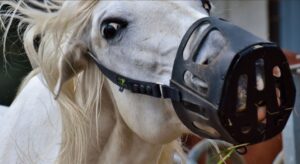 In early September 2019 a stakes race for thoroughbreds was being conducted at the Maisons-Laffitte Racecourse which is located near Paris. Lucky Lycra, ridden by François-Xavier Bertras, was the eventual winner, with favourite Palomba finishing second. The unusual incident occurred near the finish as the two horses raced close together.
Bertras made a challenge to Palomba and her jockey Maxime Guyon in the stretch run of the stakes race. The footage records the movement but cannot establish the horse’s intention. A video of the race shows the horse turn her head as Bertras and Lucky Lycra approached. Palomba then reached over and bit the jockey on the arm.
Lucky Lycra and Bertras won the race despite the incident. A visible head movement or bite does not demonstrate that a horse intended to prevent a rival from winning. The loss of Palomba must have disappointed many racing bettors because she had become a prohibitive favorite by the time the gates were opened.
Horse Behaviour and Race Day Risk Management
The incident involving a French jockey being attacked by a rival horse during a race highlights an aspect of horse racing that most spectators rarely consider — the unpredictable behaviour that horses, as prey animals with powerful instincts, can occasionally exhibit under the stress and stimulation of competitive racing. While thoroughbreds are selected and trained specifically for their ability to handle the racing environment calmly and competitively, the combination of speed, proximity to other horses, and the sensory intensity of a race can occasionally trigger instinctive responses that no amount of training can completely suppress.
Racing officials and track veterinarians work continuously to identify horses that show aggressive tendencies before races and to manage them appropriately through equipment, paddock management, and — in extreme cases — exclusion from racing. The incident serves as a reminder of the genuine physical risks that jockeys accept as part of their professional lives, and of the importance of ongoing attention to equine behaviour assessment as part of racing’s safety framework. For more on jockey safety and the risks of the profession, our articles on jockey welfare and people behind the scenes of horse racing provide broader context on the human dimension of the sport.
Horses Savage Other Horses and Riders
As strange as this type of behavior may sound, this account does not establish its frequency in horse racing. The frequency cannot be established from this one incident. Some horses have bitten other horses during races, but the cause of a particular incident cannot be established from video alone.
What is less common to see in horse racing is a horse that has savaged a jockey. It is rare to see riders get bitten. Footage can show proximity and the action itself, but it cannot establish anger or a chosen target in the sense of a human decision. Describe the sequence without assigning a motive.
Decisions about equipment, continued participation and welfare belong to qualified racing officials and veterinary professionals under the applicable rules. This article does not establish what equipment would prevent a repeat incident. An improvised solution should not be recommended from a short video without an assessment of the individual horse and the safety implications. Check our Bovada racebook review, Twinspires review or even our Betamerica review. All great choice if you are in the US. online racebook comparison for folks anywhere!
Racing fans can check out Palomba’s bite in a video shared by Fox News.
What the Footage Can Establish
| Question | Evidence to use | Limit |
|---|---|---|
| Who finished first? | Official race result | A dramatic clip alone may omit the finish |
| What contact occurred? | The visible sequence | Camera angle can limit detail |
| Why did the horse react? | Qualified assessment and fuller context | A short clip cannot establish intention |
| How common is it? | A defined incident dataset | One event cannot supply a frequency |
The historical account concerns a particular race, not a pattern established by this site. Reports and footage can support a description of contact, while medical findings, welfare assessments and any official action need their own records. Avoid presenting a dramatic headline as a diagnosis of the animal’s behaviour.
Related research
Continue the Analysis
Racehorse Profiles
Explore notable horses, breeds, form, and stories from racing history.
ContinueJockey Profiles
Browse riders, careers, records, and the craft of race riding.
ContinueTrainers & Training
Learn conditioning concepts and browse trainer profiles.
Continue