
Saratoga Race Course “Graveyard of Favorites”
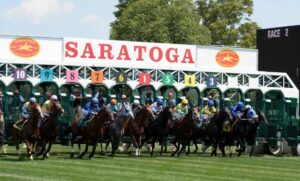
Saratoga Race Course opened in 1863 and remains one of the defining venues in U.S. Thoroughbred racing. The “Graveyard of Favorites” nickname reflects famous upsets, but it is not proof that opposing every favorite produces a betting advantage.
2026 Saratoga Meet
NYRA’s 2026 schedule announcement called for a 46-day summer meet from July 3 through September 7, with more than 70 stakes worth over $23 million. Dates, purses, grades, and race placement can change, so readers should use NYRA’s current Saratoga stakes schedule.
| Period | Dates | Scope |
|---|---|---|
| Belmont Stakes Racing Festival | June 3–7 | Five additional Saratoga racing days |
| Summer meet | July 3–September 7 | 46 racing days, including July festival |
| Total announced Saratoga program | Both periods combined | 51 racing days, not 46 for the whole year |
Why Saratoga Matters
The meet brings together leading horses, trainers, and jockeys in maiden, allowance, stakes, dirt, and turf racing. That concentration creates competitive fields, but a prestigious meet does not supply a shortcut. The field, conditions, pace, and price still determine the decision.
The Travers Stakes
The Travers is Saratoga’s signature race for three-year-olds. Its history includes famous surprises. In 2015, American Pharoah did not skip the Travers: after winning the Haskell Invitational, he ran at Saratoga and was defeated by Keen Ice.
Whirlaway remains the only U.S. Triple Crown winner also to win the Travers in the same three-year-old season. Historic claims should be kept separate from current handicapping advice.
“Graveyard of Favorites” in Context
Upsets involving Man o’ War, Secretariat, Gallant Fox, and American Pharoah helped build Saratoga’s nickname. Memorable defeats do not establish that favorites, as a group, are systematically underpriced today.
A claim that Saratoga favorites underperform would require a reproducible dataset: defined years, race types, odds bands, scratches, takeout, return on investment, and a comparison group. Without that evidence, use the nickname as racing tradition rather than a betting system.
Jockey and Trainer Statistics
Meet leaders change. Current standings should come from NYRA and should show starts as well as wins. Historical records for riders such as John Velazquez and Ramon Dominguez belong in a dated history section; Dominguez retired in 2013 and should not be described as a recent active leader.
A leading percentage can reflect mount quality and short market prices. Evaluate ROI, opportunity, the individual horse, and today’s race setup before treating the name as relevant.
Handicapping Saratoga
- Read the conditions and confirm whether the race remains on its intended surface.
- Map likely early pace and update it after scratches.
- Compare relevant surface, distance, class, and course experience.
- Use current meet statistics with starts and prices.
- Demand a price that accounts for uncertainty in competitive fields.
Planning a Visit
Confirm gates, tickets, parking, policies, first post, and event information on NYRA’s official Saratoga pages. The 2026 summer meet extended beyond an old six-week description, and a current calendar is more reliable than a fixed statement embedded in an evergreen guide.
NYRA’s official track history dates the first Saratoga meet to 1863. Its Travers history records Keen Ice defeating American Pharoah in 2015.
Historic Upsets Need Denominators
A list of famous defeats selects memorable events after they happened. It does not count all favorites that won, compare odds bands or measure return after takeout. This is selection bias. A serious test would include every qualifying race in stated years and publish both strike rate and equal-unit ROI.
Dirt, Turf and Course Configuration
Check the exact surface, distance and turf-course designation on the current card. Rail settings, transfers and scratches can change pace and usable ground. A horse’s prior Saratoga result is most helpful when those conditions are comparable.
Two-Year-Old and Maiden Racing
The meet often attracts well-bred, lightly raced horses. Limited form increases uncertainty; pedigree, workouts, trainer history and market information may add context but none supplies certainty. Keep stakes modest and distinguish observations made before the race from explanations invented afterward.
Travers Analysis
For the Travers, compare preparation, distance evidence, pace, field size and development since the Triple Crown races. A famous name can compress the price. Historical champions and upsets enrich the story, while today’s wager still depends on the current field.
Build a Meet Notebook
Record dates, weather, surface changes, race types, pace and trips. Keep jockey and trainer statistics with starts and odds. Review notes after a meaningful group of races instead of declaring a bias or stable pattern from opening weekend.
Saratoga Research Checklist
- Use NYRA’s current calendar and stakes schedule.
- Confirm the surface and scratches.
- Separate historic anecdotes from current statistics.
- Include starts and prices with leader percentages.
- Test any “favorites underperform” claim on a complete dataset.
- Compare the offered price with a range of plausible outcomes.
Separate a favorite’s loss from a track pattern
For an upset, record the favorite’s odds, trip, pace role and reason for being favored. Then compare similar races that the favorite won. A famous defeat may illustrate a demanding trip, but without the winning favorites and complete stakes it cannot establish the profitability of opposing that group.
Related research
Continue the Analysis
Horse Betting for Beginners
Start with the race, the ticket, pools, odds, and a sensible first-bet workflow.
ContinueUnderstand Bet Types
Compare straight, exotic, and multi-race wagers before building a ticket.
ContinueLearn to Handicap
Build a repeatable process around form, pace, class, distance, surface, and price.
Continue