
Keeneland Racetrack
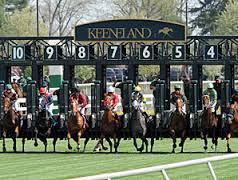
Keeneland combines Thoroughbred racing, sales, and preservation in Lexington, Kentucky. Its current main track is dirt. Keeneland removed Polytrack and installed a new dirt surface in summer 2014; racing returned to dirt for the 2014 Fall Meet.
Current Racing and Sales
Keeneland traditionally conducts Spring and Fall race meets, but dates, post times, and stakes details should be checked on the official racing page. The number and timing of Thoroughbred auctions can also change; use Keeneland’s current sales calendar rather than relying on a fixed annual count.
Main Track and Turf Course
The 1 1/16-mile main track was converted from Polytrack to dirt in 2014. References to Polytrack belong to the 2006–2014 historical period and should not be used to describe today’s racing.
Keeneland also maintains turf racing. Course use, rail settings, weather, and temporary surface transfers can affect the card, so confirm the official changes before wagering.
Blue Grass, Ashland, and Major Stakes
The Blue Grass Stakes and Ashland Stakes are central Spring Meet races for three-year-olds. Their grades, purses, dates, and qualifying significance should be verified from the current official stakes schedule.
Do not describe current stakes through the former Polytrack era. Historical results can provide context, but the surface, field, and schedule must match the question being asked.
Breeders’ Cup at Keeneland
Keeneland first hosted the Breeders’ Cup in 2015, when American Pharoah won the Classic after completing the Triple Crown earlier that year. The track hosted again in 2020 and 2022 and is scheduled to stage the event for a fourth time in 2026.
Keeneland’s September 28, 2026 announcement separates the 17-day Fall Meet, October 2–24, from the Breeders’ Cup on October 30–31. The championship dates do not extend the regular meet through every intervening day.
| Record or calendar | Interpretation |
|---|---|
| 2006–2014 Spring main-track races | The historical Polytrack period |
| 2014 Fall onward main-track races | The returned dirt era |
| 2026 Fall Meet | October 2–24; check individual racing days |
| 2026 Breeders’ Cup | Separate championship cards on October 30–31 |
| Sales catalogue | Auction information, not a race entry |
How to Handicap Keeneland
Begin with today’s surface, distance, pace, post positions, and scratches. Review horses with relevant local or comparable form, while recognizing that one prior start is a small sample. Weather and maintenance can change how the course plays within a meet.
Trainer and jockey records should state the meet and number of starts. Historical leader totals are useful as history, but they should not be presented as a current betting instruction. A booking or entry does not by itself reveal whether a horse was specifically “pointed” to win.
Track-Bias Notes
Record full cards before concluding that a path or running style is favored. Separate pace outcomes from surface effects: several front-running winners may reflect lightly pressured leaders rather than a durable speed bias. Reassess after rain, drying, maintenance, rail changes, and scratches.
Visitor Checklist
- Confirm dates, tickets, parking, and first post on Keeneland’s official site.
- Check the official condition book and daily changes.
- Use the current stakes and sales calendars.
- Label historical statistics with their year or meet.
Keeneland’s official track-maintenance material explains the current surfaces and the track’s safety work.
Keeneland’s Racing and Sales Roles
The race course and auction operation are connected parts of Keeneland’s identity, but they use different calendars. A racing visitor needs entries, scratches, post times and ticket information. A sale participant needs the named auction, catalogue, sessions and conditions of sale. Linking each current calendar prevents an old annual count from misleading either reader.
Understanding the Polytrack Era
Results from 2006 through the 2014 Spring Meet were produced on a synthetic main track. Results beginning with the 2014 Fall Meet belong to the returned dirt era. A handicapper comparing older records should label the surface rather than combining all Keeneland main-track starts.
Spring and Fall Can Differ
Weather, horse populations, stakes programs, two-year-old development and turf-course use can differ between meets. Do not turn a Spring Meet observation into a permanent Keeneland rule. Record the date, race type, surface condition, rail setting and pace.
Shipping and Local Experience
Keeneland attracts runners from several circuits. A local start can show that a horse handled the configuration, but a shipper can bring stronger or more relevant form. Compare class and figures on compatible scales, then review the likely trip. Familiarity is evidence, not an automatic advantage.
Worked Bias Log
For each dirt race, record distance, field size, first-call leader, winner’s first-call position, path in the stretch and pace pressure. For turf, add course and rail setting. Review the whole card before writing a conclusion. If the winners shared a favorable pace rather than a path, label it as pace evidence.
Current-Information Checklist
- Open the official racing calendar.
- Confirm entries, scratches and surface changes.
- Use the current stakes schedule.
- Use the separate current sales calendar.
- Date every leader statistic and historical result.
- Recheck information close to the visit or wager.
Comparing preparation for the championships
A Fall Meet performance can show recent form at Keeneland, but the championship field may introduce stronger opposition, a different distance or a different pace. Note what the local start actually demonstrates and what remains untested. Keep workout observations separate from timed race results, and avoid counting the same performance twice when a figure already includes track adjustments.
Related research
Continue the Analysis
Major Racing Events
Explore Triple Crown races, championships, festivals, and international meetings.
ContinueRacetrack Guides
Learn how layout, surface, configuration, and conditions shape a race.
ContinueHandicapping Library
Study form, pace, class, figures, distance, surface, and price.
Continue