
Betting Horse-Racing Running Styles: Pace and Trip Context
On this page 22 sections
- Common Style Labels
- Position Is Not Energy Use
- No Fraction Is Universally Fast
- Build a Pace Map
- Several Speed Horses Do Not Guarantee a Duel
- Rider Intent Is Uncertain
- Scratches Can Reshape the Race
- Surface and Distance Matter
- Trip Evidence Can Change the Label
- A Worked Three-Horse Pace Map
- Use Pace Figures Carefully
- Map Exotics by Outcome, Not Certainty
- Test the Pace Assessment
- Running-Style Checklist
- Field Size Changes Pressure and Position
- Lone Speed Is a Scenario, Not a Selection
- Pace Versus Track Bias
- Assign Scenario Weights Carefully
- Review More Than the Winner
- A Pace Scenario Is Not a Win Probability
- Change the Pace Map When a Runner Scratches
- Read the Weighted Pace Example
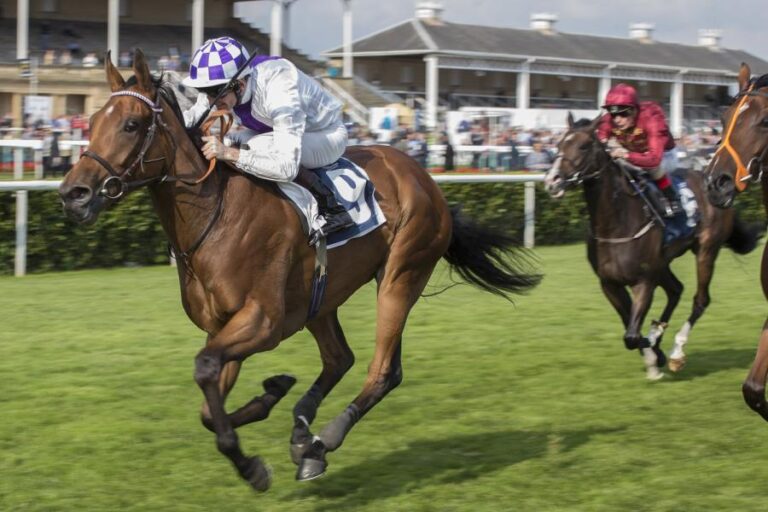
A running style describes how a horse has tended to occupy a race, not a position it must take today. Use several comparable races, study how quickly the field traveled, and prepare more than one pace scenario.
Common Style Labels
- Front-runner or early: often contests or secures the lead.
- Presser or early/presser: commonly races near the leaders and can challenge before the stretch.
- Stalker: tends to sit behind the first group and seek a later move.
- Closer or sustained: usually makes its main advance from farther back.
Providers use different labels and algorithms. Read the legend for the product in front of you. A horse may also change tactics with distance, surface, post, equipment, rider, fitness, or the pace offered by the field.
Position Is Not Energy Use
A leader after a slow opening segment may have used less energy than a horse sitting third in a very fast segment. Conversely, a closer can be working hard merely to stay in contact. Running position alone does not show the effort required to hold it.
Compare fractional times or pace figures on a consistent scale, then add trip information such as width, traffic, restraint, and pressure.
No Fraction Is Universally Fast
A :22 opening quarter can be demanding in one race and ordinary in another. A :25 quarter can be slow in a short dirt sprint but reasonable in a longer turf race. Distance, surface, class, run-up, course layout, weather, and figure method all matter.
Use track-, distance-, surface-, and class-specific context. Do not build a pace rule from raw fractions taken from unlike races.
Build a Pace Map
- List each runner’s early position in several comparable races.
- Note the pace of those races rather than positions alone.
- Identify horses that have led, pressed, rated, or closed successfully.
- Mark the post positions and the run to the first turn.
- Remove scratches and rebuild the map.
- Write a primary and an alternate scenario.
A map is a forecast with uncertainty. It should help explain what each runner may need, not declare the first call in advance.
Several Speed Horses Do Not Guarantee a Duel
Four runners with early-speed labels may contest the lead, but one may break poorly, rate willingly, change distance, or simply be slower than the others. One apparent front-runner can also be challenged by a horse whose past races hid tactical speed.
Consider what each outcome requires: if A and B both insist on their usual fast starts, C may receive a stalking trip; if B rates, A may control. Assess both possibilities rather than treating a duel as certain.
Rider Intent Is Uncertain
A rider change or post draw can support a tactical possibility, but public information rarely proves the stable’s plan. Interviews and official comments can add context when current and attributable. The break, horse’s response, and rival tactics can still change execution.
Scratches Can Reshape the Race
When an early runner scratches, the remaining leader may face less pressure. When a closer scratches, the pace itself may be unchanged but exotic structures and prices can move. Reassess both the likely shape and the market. Do not rely on a pace map made before final changes.
Surface and Distance Matter
A horse that leads in routes may sit behind faster rivals when cutting back. A sprint leader may settle when stretching out. Turf and dirt can produce different pace patterns, but neither supports one universal rule. Compare races with similar configurations and conditions.
Trip Evidence Can Change the Label
A horse listed as a closer may have broken slowly or encountered traffic in its recent races. A supposed front-runner may have inherited slow leads rather than demonstrated exceptional early pace. Watch replays when available and use chart comments as a prompt to investigate, not as a complete account.
A Worked Three-Horse Pace Map
Horse A has led in three recent six-furlong dirt sprints, twice under moderate pressure. Horse B led a slower five-and-a-half-furlong field but rated successfully two starts ago. Horse C has sat two to four lengths back and finished well when the leaders contested a fast pace.
The primary scenario has A leading, B pressing, and C stalking. The alternate has B rating, allowing A an easier lead. C benefits more from the first scenario but is not guaranteed to win it; class, position, ground loss, and final ability remain important.
If the market heavily discounts A because it expects a duel, the alternate scenario matters. If C is very short because everyone sees the same pace, the apparent pace advantage may already be priced.
Use Pace Figures Carefully
Pace-figure providers use different scales and segment definitions. Keep one system consistent within a comparison and check whether higher or lower numbers represent faster pace. Do not combine a raw fraction, a pace figure, and a final-time speed figure as though they were the same measurement.
Map Exotics by Outcome, Not Certainty
A projected duel can influence win, exacta, or multi-race tickets, but every added combination has a cost. Write which pace scenario each ticket requires. Avoid including a runner automatically in every exotic merely because its style seems consistent.
Test the Pace Assessment
Before the race, save the primary scenario, alternate scenario, projected leader, expected pressure, and fair prices. Afterward, record the actual fractions, positions, scratches, trip, and official return. Grade the forecast separately from the winning selection. A correct pace map can still produce a losing bet at a poor price.
Running-Style Checklist
- Use multiple comparable races.
- Separate position from energy use.
- Put fractions or pace figures in context.
- Write at least one alternate scenario.
- Update after scratches.
- Compare the forecast with the offered odds.
Running styles make the likely shape easier to discuss. They do not make tactics fixed, fractions universal, or value automatic.
Field Size Changes Pressure and Position
A leader in a five-horse field may reach the rail without using the same energy required in a twelve-horse field. Closers in large fields can encounter more traffic and ground loss. Compare the number of credible pace participants, not only the total field size, and note how the horse handled similar situations.
Lone Speed Is a Scenario, Not a Selection
An apparent lone leader may receive an efficient trip, but it still must break, establish position, handle the distance, and finish strongly enough. Rivals can apply earlier pressure than their labels suggest. Estimate how often the favorable scenario occurs and whether the odds already assume it.
Pace Versus Track Bias
Front-running winners can result from moderate fractions, superior horses, or a surface advantage. Keep a daily log with early pace, field quality, paths, and weather before declaring a bias. If the leaders won after setting slow paces, label the evidence as pace-related until a broader pattern supports another conclusion.
Assign Scenario Weights Carefully
A bettor can write rough probabilities for the primary and alternate pace maps, but the numbers are estimates. Check that they sum to a complete view and avoid false precision. If the wager succeeds only under one narrow scenario, demand a larger margin between estimated fair odds and the market.
Review More Than the Winner
After the race, compare the forecast with every principal contender. A pace projection can be broadly correct even if the expected beneficiary encounters traffic, while a winner can conceal a poor forecast through superior class. Keeping those distinctions makes future maps more honest.
A Pace Scenario Is Not a Win Probability
Suppose you estimate a 60% chance of a contested pace and a 40% chance of an easier lead. Those numbers describe possible race shapes, not a 60% winning chance for the closer. The closer can still lose under its preferred scenario, and it can sometimes win under the less favorable one.
For a hypothetical calculation, give the closer a 30% chance within the contested scenario and a 10% chance within the easier-lead scenario. Its combined estimated win chance is (0.60 × 0.30) + (0.40 × 0.10) = 22%. These are illustrative assumptions, not probabilities derived automatically from a running-style label. If you cannot support such estimates, use the scenarios qualitatively and avoid false precision.
Change the Pace Map When a Runner Scratches
Suppose two horses regularly seek the lead and a stalker appears to benefit from their duel. If one speed horse scratches, the remaining leader may face less pressure; the original case for the stalker has weakened. Redraw the early positions instead of carrying yesterday’s pace forecast into the final bet.
Do not automatically switch to the remaining leader. Check whether it can break cleanly, handle the draw and sustain the distance, and whether another runner has shown unrecorded early speed under similar conditions. Record both the original and revised maps so the post-race review can identify which assumption changed.
Read the Weighted Pace Example
| Scenario | Scenario weight | Conditional closer win chance | Contribution |
|---|---|---|---|
| Contested lead | 60% | 30% | 18 percentage points |
| Easy lead | 40% | 10% | 4 percentage points |
| Combined illustration | 100% | Weighted result | 22% |
These are hypothetical inputs, not measured forecasts. Multiply each scenario’s weight by the closer’s chance within that scenario, then add the contributions: 0.60 × 0.30 + 0.40 × 0.10 = 0.22. A 60% chance of a contested pace is not a 60% chance that the closer wins.
Related research
Continue the Analysis
Horse Betting for Beginners
Start with the race, the ticket, pools, odds, and a sensible first-bet workflow.
ContinueUnderstand Bet Types
Compare straight, exotic, and multi-race wagers before building a ticket.
ContinueLearn to Handicap
Build a repeatable process around form, pace, class, distance, surface, and price.
Continue