
Foolish Pleasure Racehorse
On this page 7 sections
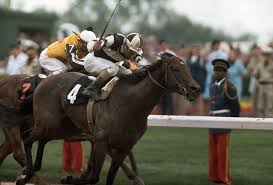 The 1975 Kentucky Derby winner, Foolish Pleasure, will go down in history as one of the all-time great racehorses, but a sad twist of fate made one race disproportionately prominent in later retellings that came to overshadow his otherwise spectacular career.
Foaled in Williston, Florida in 1972, Foolish Pleasure was owned by John L. Greer. The horse generated high expectations from the very beginning. He had the look and pedigree of a potential Classic winner. Trainer LeRoy Jolley was hired to condition the horse and the colt embarked on an aggressive two-year-old campaign.
Juvenile championship and classic preparation
The highlight of Foolish Pleasure’s first year in racing was capturing the Hopeful Stakes at Saratoga. Never an easy race to win, the event typically contains horses that will emerge as contenders the following year in the Triple Crown series of races. His juvenile stakes campaign also included the Cowdin; the Flamingo victory came in 1975, during his three-year-old preparation.
At the same time Foolish Pleasure was making short work of his two-year-old rivals, a filly on the East Coast was also making her debut in a similar fashion. Ruffian, trained by Frank Whiteley, Jr., finished her two-year-old season just as Foolish Pleasure did by remaining undefeated. No one really imagined that the two horses were on a devastating collision course.
As 1975 dawned and the Kentucky Derby drew closer, Foolish Pleasure was still leaving his rivals far behind. In the Wood Memorial, a race that had been the downfall of Triple Crown winner Secretariat, Foolish Pleasure captured his final victory in preparation for the Classic series. He was the favorite in the Kentucky Derby and performed to expectations yet lost both the Preakness and Belmont to longshot runners. Meanwhile, Ruffian was completing her sweep of the fillies Triple Crown series to remain undefeated.
The 1975 match race and later career
Talk began between the connections of both horses to arrange a match race between them. The race was scheduled for July 6, 1975, just a short time after the Classic series for both horses. The two met at Belmont Park in an event that was billed as a Battle of the Sexes similar to the tennis match between Billie Jean King and Bobby Riggs. During the race Ruffian broke the sesamoid bones in one of her front legs and continued to run on the damaged tissue. Equine doctors tried to save her but she reinjured herself in recovery and was subsequently euthanized. Foolish Pleasure had won the race in the worst manner possible.
After the match race with Ruffian, Foolish Pleasure was eventually sent to stud with earnings of more than $1 million in the bank. He lived until 1994 and was euthanized after developing laminitis, a deadly horse ailment, in all four feet. The following year the horse was inducted into the National Racing Hall of Fame. Despite all of his legendary accomplishments, most race fans today still think of that fateful match with Ruffian when they hear the name Foolish Pleasure.
Don’t miss the exciting action of the upcoming Triple Crown series! Compare current account eligibility and the terms of any bonuses or rebates before signing up. Check our Bovada racebook review, Twinspires review or even our Betamerica review and confirm availability for your location. online racebook comparison to compare current coverage and terms.
Foolish Pleasure’s Race Against Ruffian and Its Historical Significance
Foolish Pleasure’s connection to Ruffian through their 1975 match race at Belmont Park gives his career a bittersweet historical significance that no amount of his own genuine racing achievement can fully separate from. The race — billed as the ultimate test of whether the best filly in the country could defeat the best colt — ended in tragedy when Ruffian suffered a catastrophic leg fracture midway through. Foolish Pleasure, running strongly and competitively, was suddenly transformed from a participant in an exciting sporting event into a witness to one of racing’s most heartbreaking moments.
His subsequent career, including major stakes victories that confirmed his genuine class, never quite escaped the shadow of that afternoon. But for racing historians, his performance in the match race before the tragedy occurred was significant — he was competitive with a horse whose overall form record marked her as perhaps the greatest filly in American racing history. For bettors interested in the historical context of American racing’s greatest horses and races, our articles on Ruffian and the 12 greatest race horses of all time cover both horses and their era. And our guide to a history of horse gambling traces how race-day wagering has evolved since the 1970s.
Verified career record
The National Museum of Racing and Hall of Fame records Foolish Pleasure with 26 starts, 16 wins, four seconds, three thirds and $1,216,705 in earnings. He was unbeaten in seven starts at two, won the 1975 Kentucky Derby, finished second in the Preakness and Belmont, and entered the Hall of Fame in 1995.
| Year | Starts | Wins | Earnings |
|---|---|---|---|
| 1974 | 7 | 7 | $284,595 |
| 1975 | 11 | 5 | $716,278 |
| 1976 | 8 | 4 | $215,832 |
The Ruffian match race in proportion
Ruffian’s catastrophic injury made the 1975 match race inseparable from both horses’ stories. Foolish Pleasure did not cause the injury, and the tragedy should not erase his separate record. He had already won a championship and the Derby; at four he won the Donn, Arlington Golden Invitational and Suburban, defeating Forego in the latter.
A respectful account states what occurred without turning the event into sales drama. The match did not establish which horse was superior because Ruffian did not complete it. Comparisons can instead use their records before the event, while recognizing different divisions and schedules.
Study exercise
- List Foolish Pleasure’s seven juvenile wins.
- Compare his Derby, Preakness and Belmont trips.
- Add his four-year-old handicap weights and rivals.
- Keep the match race separate from completed performance evidence.
- Write a conclusion using results rather than “greatest” language.
Record the comparison in the Race Lab. Source note: Record, connections, honors and annual totals were checked against the National Museum of Racing and Hall of Fame.
Read the three classic results together
Foolish Pleasure’s Derby win and runner-up finishes in the Preakness and Belmont describe a strong classic campaign, rather than a Triple Crown sweep. Keep the Flamingo in his 1975 preparation, not in the undefeated juvenile season. Then examine his 1976 handicap victories to see how the horse performed after the match race. This chronological approach avoids allowing a single tragic event to stand in for three seasons of racing.
Related research
Continue the Analysis
Racehorse Profiles
Explore notable horses, breeds, form, and stories from racing history.
ContinueJockey Profiles
Browse riders, careers, records, and the craft of race riding.
ContinueTrainers & Training
Learn conditioning concepts and browse trainer profiles.
Continue