
10 Legendary Jockeys in Australian Horse Racing
On this page 13 sections
Jockeys are the men and women of steel who make horse racing exciting. The diminutive athletes are pound-for-pound some of the strongest people in the world. Weighing little more than 100 pounds, a jockey is able to steer a 1,000 pound animal through narrow openings and control the horse’s speed throughout a race. Here is a look at ten jockeys that are regarded as legends in Australian horse racing.
How This Historical List Was Chosen
The selections emphasize major-race achievement, longevity, premierships, influence and recognition by racing institutions. They span different eras, so raw win totals are not directly comparable. Earlier riders competed with different calendars, travel demands, safety equipment and recordkeeping.
For current betting, this list should not replace recent form. A famous retired jockey’s career tells racing history; a current rider should be assessed through recent mounts, track and distance results, trainer relationships, tactical fit and the price available on the horse.
Scobie Breasley
 One of the first names to come to mind when thinking about successful Australian horse racing jockeys is Arthur Breasley. He was more commonly known by his nickname of Scobie. Many jockeys of the modern era will tell you that Scobie Breasley was perhaps the most naturally-gifted jockey to ever sit on a horse. He had a keen sense of balance and superb instincts, two qualities that guided him to a Hall of Fame career in Australia.
Breasley rode over 1,000 winning horses in Australia. He managed to capture a record five Caulfield Cups in his career. Breasley was also known for getting the best from his horses using only his hands and feet. He very rarely relied on the whip to encourage his horses. The jockey was eventually lured away to Britain where he joined the ranks of the top jockeys there, winning more than 2,000 races. Breasley passed away in 2006. Today he is honored with the annual presentation of the Scobie Breasley Medal to excellence at Victorian metropolitan meetings.
George Moore
 George Moore began race riding in Australia in 1939. He would go on to become one of the continent’s all-time great jockeys. Moore was discovered soon after his debut by the Sydney trainer Tommy Smith. The two formed an impressive team that dominated Australian horse racing for many years. 10 riding premierships were awarded to George Moore over the course of his impressive career, and he won 119 Group 1 stakes events. Older Group 1-equivalent counts depend on historical classification and should not be presented as a current all-time ranking.
Perhaps the most famous horse ridden by George Moore was Tulloch. The two combined for victories in the biggest stakes event in Australia. Moore also achieved success on two other continents. He won races in Europe such as the Epsom Derby and Ascot Gold Cup, and he also became an award-winning trainer in Asia. Moore was named the top trainer in Hong Kong 11 times. He passed away in 2008.
Damien Oliver
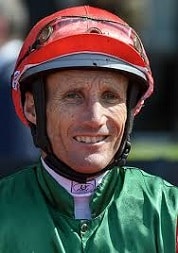 Damien Oliver began race riding in 1988 and retired in December 2023 after one of the most accomplished careers in Australian racing. He was an immediate success, and soon caught the attention of Australian horse training legend Lee Freedman. Oliver moved his tack to Melbourne so that he could ride for Freedman as an apprentice. The two combined to produce victories in important events such as the Melbourne Cup and Cox Plate.
Oliver’s completed career includes 129 Group 1 wins and 11 Scobie Breasley Medals. His completed record places him among Australia’s most successful Group 1 riders; comparisons across eras remain difficult because race programs and classifications changed. Oliver is also one of the jockeys that has completed the Australian horse racing Grand Slam by winning the Melbourne Cup, Cox Plate, Caulfield Cup, and Golden Slipper.
Jim Cassidy
 Jim Cassidy was born in New Zealand but achieved success in Australia. Cassidy is known for his competitive attitude and tough riding ability. Never one to shy away from a confrontation, Cassidy has certainly had his share of conflicts with fellow riders. He made his mark on the Australian racing world when he rode the horse Kiwi to a win in the 1983 Melbourne Cup. What was most impressive about this ride is that the horse moved from last to first throughout the running of the event.
Cassidy passed 100 Group 1 wins across his career, an achievement whose comparison depends on whether overseas races are included. He has also completed the Grand Slam of Australian racing and will always be remembered as a jockey that could encourage the best performances from the horses he was called upon to ride.
Neville Sellwood
 Neville Sellwood was born in 1922. He came to prominence as an Australian jockey by riding for the legendary trainer Maurice McCarten. Sellwood began his career in 1940 in Brisbane before moving to the larger circuits of Sydney. It wasn’t long before Hall of Fame trainer Tommy Smith was calling, and Sellwood became one of the jockeys to be tasked with riding Tulloch. Together, horse and rider managed to win the Caulfield Cup in 1957.
Sellwood would manage to win the Caulfield Cup twice more, and he would also win the Melbourne Cup two times. Wins in the Cox Plate and Golden Slipper make him another Grand Slam Australian jockey champion. Sellwood won more than 1,500 races in his illustrious career, a feat that not many Australian jockeys can claim. His career was tragically cut short when he died at the age of 39 from injuries sustained in a race accident. French trainer Alex Head called Sellwood the best jockey to ever live.
Roy Higgins
 Roy Higgins won over 2,300 races in his long career. Higgins was nicknamed “The Professor” for his methodical approach to horse racing. He was more than just a jockey. He was a true student of the sport who always pushed himself to become better than he was. Higgins would spend hours studying the strengths and weaknesses of his opponents, looking for an edge that could give him the win.
The accomplishments of Roy Higgins are even more impressive when one realizes that he struggled for most of his career with weight issues. Despite these difficulties, Higgins was able to win 108 Group I events. That tally belongs to his historical career record; it is not a current second-place ranking across all riders. Roy Higgins won the Melbourne Cup and the Cox Plate two times each, forever cementing his legacy as a top tier Australian jockey.
Harry White
 Harry White is a rider that is often overlooked when it comes to legendary jockeys in Australia. Granted, White may not have won as many races as some of his colleagues on the tracks, but the events he did conquer were the biggest in the land. White was regarded as a distance specialist among his peers. He had a keen sense of timing that would allow him to move a horse into contention only when they were ready to make a final run. This ability helped White to score three victories in the Newmarket Handicap.
Darren Beadman
 Darren Beadman began riding horses in Australia when he was just a teenager. He started his career in 1982 and was an instant success. Beadman won his first riding title as an apprentice, earning early apprentice recognition on the Sydney circuit. He won the 1984 Golden Slipper aboard Inspired as an apprentice, a feat that many jockeys never accomplish in all their years of race riding.
As it so happens with many top Australian jockeys, other racing circuits soon came calling. Beadman found himself in Hong Kong where he repeated the success that he had achieved in his native Australia. Sadly, his career would come to a tragic halt in Hong Kong. Darren Beadman suffered a head injury that forced him to retire from racing while still a young man.
Robert Thompson
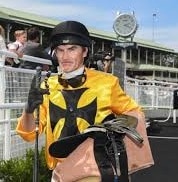 Robert Thompson’s long career illustrates achievement beyond the metropolitan spotlight. Racing Queensland reported his retirement in December 2021 with 4,447 victories, after his final ride that July. His record included seven Group 1 wins as well as repeated success in regional feature races. The earlier suggestion that he might reach 5,000 wins was speculation before retirement, not a current target or schedule. His career should be assessed in its own setting rather than dismissed because many wins came on smaller circuits.
How Jockey Form Translates to Betting Value in Australian Racing
Tracking jockey performance statistics in Australian racing is a more nuanced exercise than simply following the leading riders by win count. The most actionable jockey statistics for betting purposes are those filtered to specific situations — a particular jockey’s record at a specific track, their performance on horses first-up from a spell, or their results when riding for a specific top trainer. These filtered statistics often reveal strengths and patterns that aggregate win percentages obscure, and they identify situations where backing a specific jockey-trainer combination or a specific rider at their best venue can suggest a pattern to investigate; small samples and selection effects do not establish an edge over the market.
The leading Australian jockeys are extraordinarily accomplished by any international standard, and their skills — particularly in tactical races where positioning and timing the run are decisive — are often the difference between horses that just miss and horses that win. When a leading Australian rider replaces a journeyman on a horse that has shown ability in its recent races, the upgrade deserves to be weighted in your assessment regardless of whether the market has fully reflected the change. Conversely, when a leading jockey switches off a horse that was expected to receive their services, the reasons for that switch are worth investigating — it can reflect availability, commitments or connections’ decisions. A switch alone does not establish a private negative assessment of the horse. For more on Australian racing’s leading figures, our article on top 10 jockeys in Australian horse racing profiles the riders in detail. And our guide to betting jockeys in horse racing covers how to use jockey form in your handicapping.
Thomas Hales
 Thomas Hales was among the very first class of inductees into the Australian Racing Hall of Fame. The Australian Dictionary of Biography records 496 wins from 1,678 mounts during the 1872–1894 period. Those dates describe the documented sample, rather than the beginning of every part of his riding life. He also recorded many seconds and thirds. Hales was what many handicappers refer to as a money rider because of his ability to always find a way to finish in the top three.
Historical summaries of Hales describe outstanding runs of success at carnival meetings. Before quoting a particular 11-from-14 sequence, verify which meeting and season it concerns rather than automatically attributing it to the Melbourne Cup Carnival. His documented major-race victories and overall sample provide a firmer comparison.
Are you ready to watch and wager on the best jockeys in Australia? Sign up right now with one of our recommended online online racebook comparison and you could be betting the Australian races tonight from the comfort of your own home. See our Bovada racebook review, Twinspires review or even our Betamerica review. All great choice if you are in the US. online racebook comparison for folks anywhere!
Related to Australian horse racing:
- 10 Amazing Facts About Australian Horse Racing
- The Australian Racing Board
- Flemington Racecourse In Melbourne, Australia
- Doomben Racecourse, Brisbane
- Eagle Farm Racecourse, Brisbane
- The Melbourne Cup – Australias’s Biggest Horse Race
- The Cox Plate Australian Horse Race
- Timeform Ratings & Australian Horse Racing
- The Golden Slipper Stakes Australian Horse Race
- Phar Lap – The Sad End Of Australia’s Greatest Race Horse
- Top 10 Legendary Australian Race Horses
- The Australian Racing Hall Of Fame
- The Best Way To Bet Horse Races From Australia
- Australian Racing Terms You Need To Know
- 5 Reasons To Bet Australian Horse Racing
- Top 10 Jockeys In Australian Horse Racing
- Picking Horse Race Winners In Australia
- Is Horse Racing Profitable?
Record Updates That Change How to Read This List
| Record | Dated update | Reading point |
|---|---|---|
| Scobie Breasley Medal | Victorian metropolitan riding award | Not a national all-track premiership |
| Damien Oliver | Retired in 2023; 129 career Group 1 wins | A completed career record |
| Robert Thompson | Retired in 2021 with 4,447 wins | Older projections of 5,000 were not achieved totals |
| Harry White | Four Melbourne Cup victories | Major-race success deserves its own comparison |
Racing Queensland documents Thompson’s retirement, while the VRC’s tribute records White’s four Cups. Later rankings also change: Racing.com reported in March 2026 that James McDonald passed Oliver’s career Group 1 total. This historical selection therefore should not be read as a current numerical top ten.
Related research
Continue the Analysis
Racehorse Profiles
Explore notable horses, breeds, form, and stories from racing history.
ContinueJockey Profiles
Browse riders, careers, records, and the craft of race riding.
ContinueTrainers & Training
Learn conditioning concepts and browse trainer profiles.
Continue
Harry White was the very best distance rider in Australia winning four Melbourne Cups and was a hell of a nice guy away from the track as well. One of the very, very best jockeys ever.