
Why Do Horses In Australia Race On Grass?
On this page 7 sections
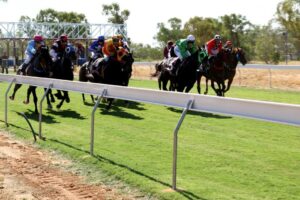 If you have attended live racing in Australia or watched Australian horse racing on a live stream from your favorite online racebook, you may have noticed that the horses race almost exclusively on grass surfaces. Turf racing is a long-held tradition in Australia and Europe. It can be challenging to handicap races on the grass, but the rewards can be great. Here’s a look at why horses in Australia race on grass.
An Old Horse Racing Tradition
Horse racing is a very old sport. It is often referred to as the Sport of Kings thanks to its history. In the earliest days of the sport the contests were reserved for royalty. These were the only class of people who could afford to breed and race horses competitively.
The old kings of Europe built beautiful race courses that contained grass tracks that often became a part of the countryside landscape. Attending these events was about more than just betting on horses. It was also about taking in the scenery and enjoying the event in a tranquil setting. Compare this with today in the US where many race tracks have been built in cities, surrounded today by buildings and neighborhoods.
There was another reason that the fathers of horse racing chose to race their horses on grass. Grass is the natural habitat of the horse. Many people mistakenly believe that dirt is the natural habitat because they are used to seeing horses race on dirt in the US and other areas. Horses use varied terrain, including grassland, and their habitat does not establish the safety of a prepared racing surface. Turf racing developed through sporting traditions and course design; a maintained track is an engineered surface whose footing also depends on soil, drainage, irrigation and wear.
The Three Categories of Racing Surfaces
There are three primary racing surfaces that are used in thoroughbred racing today. Each of them is used throughout the world, but in some areas one surface is considered traditional. In Australia, the traditional racing surface is grass.
Turf courses are covered with maintained grass that is maintained throughout the racing season. When watching a race on television or your computer, it often appears that the grass is cut very short. The grass is maintained to the venue’s specifications; it is not generally knee-high. The cushioning and traction depend on the full surface profile and its condition, rather than grass height alone.
In America the traditional racing surface is dirt. This came about when horsemen in America sought to construct elegant racing venues that would rival those of their European counterparts. A dirt track usually consists of a sandy bottom with loose dirt on top.
There is a third type of surface that is being used in many horse racing locations. This is an artificial surface that is made up of materials such as sand, fibres and binders, depending on the particular product. Some tracks have adopted the artificial track because they believe that it is a safer option for horses and contributes to fewer injuries.
The Excitement of Grass Racing in Australia
The inherent nature of grass racing is the production of exciting race finishes. This is very true in Australia. There, many races are not decided until the final stages of the race. Specifically, the final 1/8th of a mile can produce many exciting duels between horses that are trying to cross the finish line first and claim victory.
Some turf races develop at a slower early pace before a sprint home, while others feature strong early pressure. The field’s running styles and the race distance matter more than assuming that all turf races follow one pattern. A front-runner will usually emerge and set a pace that the other horses will then follow. Once the horses have cleared the final turn and are headed for home, all the jockeys ask the horses to give their best effort.
The horses then unleash the energy that they have conserved for a final run to the wire. It is not uncommon to see a horse come from the back of the pack to win in Australia. Many times the races are decided by the margin of a nose!
When handicapping the grass races in Australia, always factor in the running styles of turf horses. Strong closing speed can be useful, but a closer may struggle when leaders obtain an uncontested pace. Compare pace, position, trip and odds instead of automatically favoring runners from the rear.
How Australian Turf Racing Shapes Betting Strategy
Australia’s predominant use of natural turf for racing creates a specific set of handicapping considerations that differ from the mixed-surface American market or the all-weather-heavy British winter programme. Australian turf racing is heavily influenced by going conditions, which can shift significantly with rainfall and drainage quality across the racing season. Horses that excel on firm Australian turf in dry conditions may perform very differently on soft or heavy going after rain, and tracking each horse’s going preferences is a more important element of Australian handicapping than it is in markets where synthetic surfaces provide consistent conditions year-round.
The quality of turf maintenance at different Australian tracks also creates venue-specific form lines that reward track-specialist knowledge. A performance at Royal Randwick still needs adjustment for the distance, going, opposition, pace and course configuration before it is compared with a run elsewhere. Other tracks have surfaces that are more variable in quality or that favour specific running styles in ways that do not always reflect the horse’s true ability. Building a knowledge base of track-specific surface characteristics at the Australian venues you bet on regularly is as important as understanding form — it provides the contextual framework within which individual race assessments become meaningful. For more on Australian racing’s unique character, our articles on racing horse betting in Australia and the best way to bet horse races from Australia cover the practical dimensions.
Concerns Over Racing Surfaces
Critics of horse racing are quick to point out that some surfaces appear to cause injury to horses more often than others. The introduction of artificial horse racing surfaces in America was a direct response to the safety concerns expressed by those outside of the thoroughbred racing industry.
Turf racing does seem to be one of the more safer contests of horse racing. Horses are fragile animals and can still suffer injuries on the turf, but many believe that the surface yields better to the weight of the horses as they run.
Sadly, those beliefs may be in error. Some individuals have pointed to the largest race in Australia as evidence that turf racing can be just as deadly as racing on dirt. One news report claims that the Melbourne Cup has been responsible for five horse deaths since 2013. The 2014 deaths also require care in classification: a fatal racing injury and a death following an incident after the race are not the same category. Read the individual accounts rather than treating both as identical on-track breakdowns.
Nevertheless, Comparing safety across countries requires equivalent injury definitions, reporting periods and rates per exposure. A smaller death count may reflect fewer starts, and racing fatalities should not be mixed with training deaths. Surface, maintenance, horse population, speed and veterinary factors can all affect an analysis; a country ranking or a single-cause medication claim cannot be inferred from the anecdotes above.
Are you ready to try your hand at the turf racing that is held in Australia? You can do that when you sign up for one of our recommended online racebooks. Check whether past performances are included, and you could also qualify for a nice bonus when you make your very first deposit before horse betting.
Read the turf condition, not just the surface label
Australia’s grass tradition does not mean every turf race presents the same ground. The official track rating, weather, rail position and maintenance can change how a course rides from one meeting to another. A runner with a good record on firm going may face a different test on a rain-affected surface, and an inside draw is not automatically favorable when the rail or worn ground changes the usable racing line.
Before comparing past performances, match the track, distance, going and quality of opposition as closely as possible. Note whether a prior run was on the same course configuration and whether a late downgrade or upgrade followed new weather information. Australia also has synthetic and other racing surfaces in some settings, so “almost exclusively grass” should be read as a description of the major Thoroughbred turf tradition, not a rule covering every venue.
Surface and going: what to compare
| Surface or rating | Meaning | Form question |
|---|---|---|
| Turf | A maintained grass racing surface. | Was the previous run on comparable ground and course configuration? |
| Synthetic | A manufactured surface; composition varies by product. | Does the runner have relevant form on this particular surface? |
| Good 3–4 | The Australian turf ratings around good ground. | Was the horse’s performance achieved under similar conditions? |
| Soft 5–7 / Heavy 8–10 | Increasingly rain-affected turf categories. | Is the prior wet-track evidence strong enough, and has the rating changed? |
Racing Victoria’s preparation guidance explains the national turf rating scale and the goal of preparing flat-racing ground with some give. The published rating describes conditions at inspection, not a promise that they will remain unchanged all day. Record weather, updates, rail position and the likely pace before drawing conclusions from a horse’s surface record.
Related research
Continue the Analysis
Horse Betting for Beginners
Start with the race, the ticket, pools, odds, and a sensible first-bet workflow.
ContinueUnderstand Bet Types
Compare straight, exotic, and multi-race wagers before building a ticket.
ContinueLearn to Handicap
Build a repeatable process around form, pace, class, distance, surface, and price.
Continue